Salt-affected land is a large and growing problem in irrigated regions of India. Fields that once produced well develop white patches, crops establish poorly, and yields decline year after year.
The important first step is diagnosis, because saline and alkaline soils look similar and are treated in opposite ways. Applying the wrong treatment makes the problem worse.
Telling Them Apart
Saline soil
High concentration of soluble salts. Often shows a white crust on the surface when dry. Soil structure is usually reasonable, and water infiltrates normally. Crops show scorched leaf margins and stunted growth — the plant cannot take up water despite the soil being wet.
Alkaline or sodic soil
High exchangeable sodium. Often shows a dark or blackish surface. Soil structure is destroyed — the soil disperses, forms a hard crust, and water will not infiltrate. Puddles sit on the surface for a long time after rain, and the soil sets like concrete when dry.
The practical field test
Pour water on the dry surface. If it soaks in reasonably and the problem is a white crust, you are probably dealing with salinity. If it sits on the surface and the soil is hard and dispersive, sodicity is likely.
Confirm with a soil test. The report gives electrical conductivity and pH, which distinguish the two definitively. Do not commit to expensive treatment on a field diagnosis alone.
Treating Saline Soil
The principle is to leach the salts out of the root zone with good quality water.
- Provide drainage first. This is the step that decides everything. Leaching washes salts downward; without drainage they simply come back up as the soil dries
- Apply water in excess of crop requirement to move salts below the root zone
- Level the field well — high spots accumulate salt as water evaporates from them
- Use good quality irrigation water where available
Applying gypsum to a saline soil that is not sodic achieves little. This is the most common misapplication.
Treating Alkaline or Sodic Soil
The principle is to replace sodium on the soil particles with calcium, which restores structure, then leach the displaced sodium away.
- Apply gypsum at a rate calculated from the soil test. The quantity depends on the sodium level and soil depth and must be calculated, not guessed
- Incorporate into the surface layer
- Irrigate to allow the reaction and to leach the displaced sodium
- Ensure drainage so the leached sodium leaves the field
- Add organic matter — farmyard manure, compost, green manure — which speeds structural recovery considerably
Reclamation is not a single-season job. Improvement is gradual, over two to four years, and requires the treatment to be maintained.
Drainage Decides Everything
Both treatments depend on salts being able to leave the field. In land with a high water table or an impermeable layer, leaching just moves salts down a short distance and they return with capillary rise.
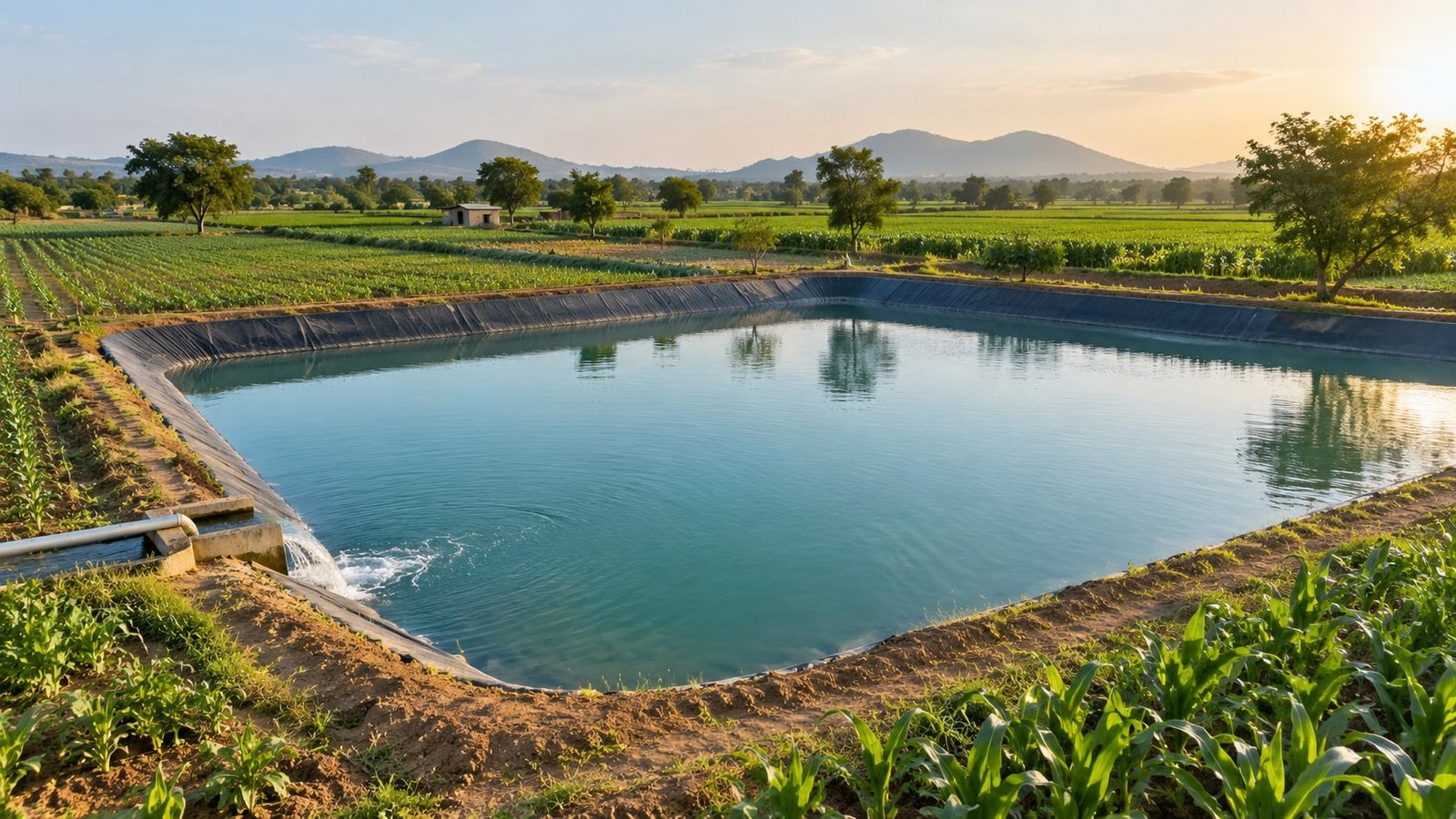
Where a natural outlet exists, surface or subsurface drains can be laid. Where the problem is regional — a rising water table across a whole area — individual field drainage has limited effect and the issue needs a community or watershed-level response.
Assess drainage feasibility before spending on amendments. Money spent on gypsum in a field with no drainage outlet is largely wasted.
Crop Choice While Reclaiming
Some crops tolerate salt far better than others. Growing tolerant crops during the reclamation period keeps the land productive while conditions improve.
Tolerance rankings for common crops are available from soil salinity research institutes and from your KVK. As a general pattern, some cereals and fodder crops tolerate more salt than most pulses and vegetables.
Salt-tolerant varieties of major crops have been developed specifically for these conditions and are worth asking about.
Practices That Help
- Organic matter — the single most useful ongoing input for salt-affected land
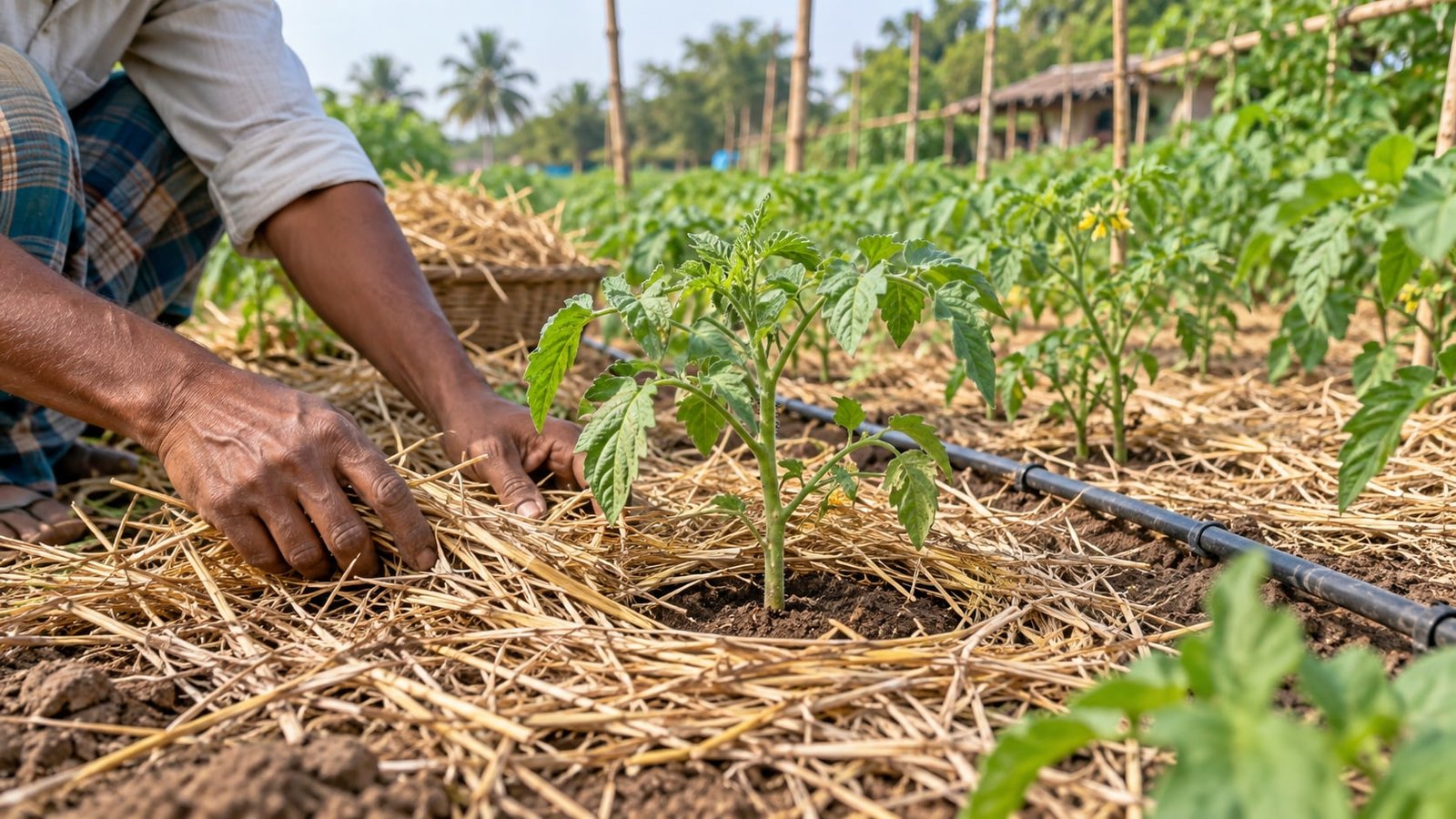
- Mulching — reduces evaporation from the surface, which is what concentrates salt at the top
- Ridge planting — salts accumulate at the ridge top, so planting on the shoulder of the ridge places seed in lower-salt soil
- Drip irrigation — keeps a leached zone around the root system and avoids the wetting-drying cycle that concentrates surface salt
- Avoid over-irrigation with poor quality water, which is often what created the problem
Get It Assessed Properly
Reclamation costs money and takes years. Before starting, get a proper soil test and a treatment recommendation from your KVK, state agriculture department, or a soil salinity research centre. The gypsum requirement in particular must be calculated for your specific soil.
Reclamation requirements are highly site-specific. Get a soil test and a professional recommendation before applying any amendment.