Sprinkler irrigation delivers water through the air as a spray, covering the whole field surface. It suits crops that drip irrigation handles poorly — closely spaced field crops where running a lateral along every row is impractical.
The two systems are not competing options for the same situation. They suit different crops, and choosing between them is mostly a question of plant spacing.
Where Sprinklers Fit
- Close-spaced field crops — wheat, pulses, groundnut, mustard, fodder crops
- Undulating land where levelling for flood irrigation is impractical
- Light, sandy soils with high infiltration, where flood irrigation loses water below the root zone
- Shallow soils that cannot hold a large single application
Where Drip Is Better
- Widely spaced crops — orchards, vegetables on beds, cotton, sugarcane
- Areas of very limited water, since drip loses far less to evaporation
- Crops susceptible to foliar disease, which sprinklers can worsen by wetting leaves
- Saline water, which causes leaf burn when sprayed onto foliage
System Components
- Pump capable of delivering the required pressure — this is the critical specification
- Filter to prevent nozzle blockage
- Mainline and laterals, usually portable aluminium or HDPE pipe
- Risers and sprinkler heads
- Pressure gauge — inexpensive and essential
Pressure Is the Whole Game
Sprinklers are designed to operate at a specified pressure. Below it, the spray pattern collapses — water falls close to the head, the outer part of the circle gets nothing, and the field is irrigated unevenly. Above it, the spray atomises into fine droplets that drift away in wind and evaporate.
Fit a pressure gauge at the pump and at the far end of the line, and check that both are within the sprinkler’s specified range. This one habit prevents most sprinkler performance problems.
Spacing and Overlap
Sprinklers deliver more water near the head and less at the edge of their circle. For uniform application, adjacent circles must overlap substantially — the specified spacing is always less than the wetted diameter.
Farmers who space heads at the full wetted diameter to save on equipment get dry rings between sprinklers and a visibly patchy crop. The saving is false.
Wind
Wind distorts the spray pattern and is the main practical limitation of sprinkler irrigation.
- Irrigate in the early morning or evening when wind is usually lowest
- Reduce spacing in consistently windy areas
- Avoid very fine nozzles where wind is a problem — larger droplets drift less
Subsidy
Sprinkler systems are subsidised under micro-irrigation programmes alongside drip, with higher rates typically available for small and marginal farmers. Rates and procedures vary by state and change between years.
Apply and get sanction before purchasing, and use an empanelled supplier. Check current terms with your district horticulture or agriculture office rather than relying on a dealer’s figure.
Maintenance
- Clean the filter regularly — blocked nozzles almost always trace back to filter neglect
- Check nozzles for wear. Worn nozzles pass more water at lower pressure and ruin the distribution pattern
- Flush lines at the start of each season
- Check that all heads are rotating. A stationary head floods one spot and starves the rest of its circle
- Drain and store portable pipes properly between seasons
The Disease Caution
Sprinklers wet the foliage, and prolonged leaf wetness encourages fungal and bacterial disease in susceptible crops.
Irrigate early enough in the day that foliage dries before nightfall. Avoid sprinkler irrigation during flowering in crops where flower blight is a risk, and avoid it entirely for crops with serious foliar disease pressure — those are better suited to drip.
Choosing Between the Two
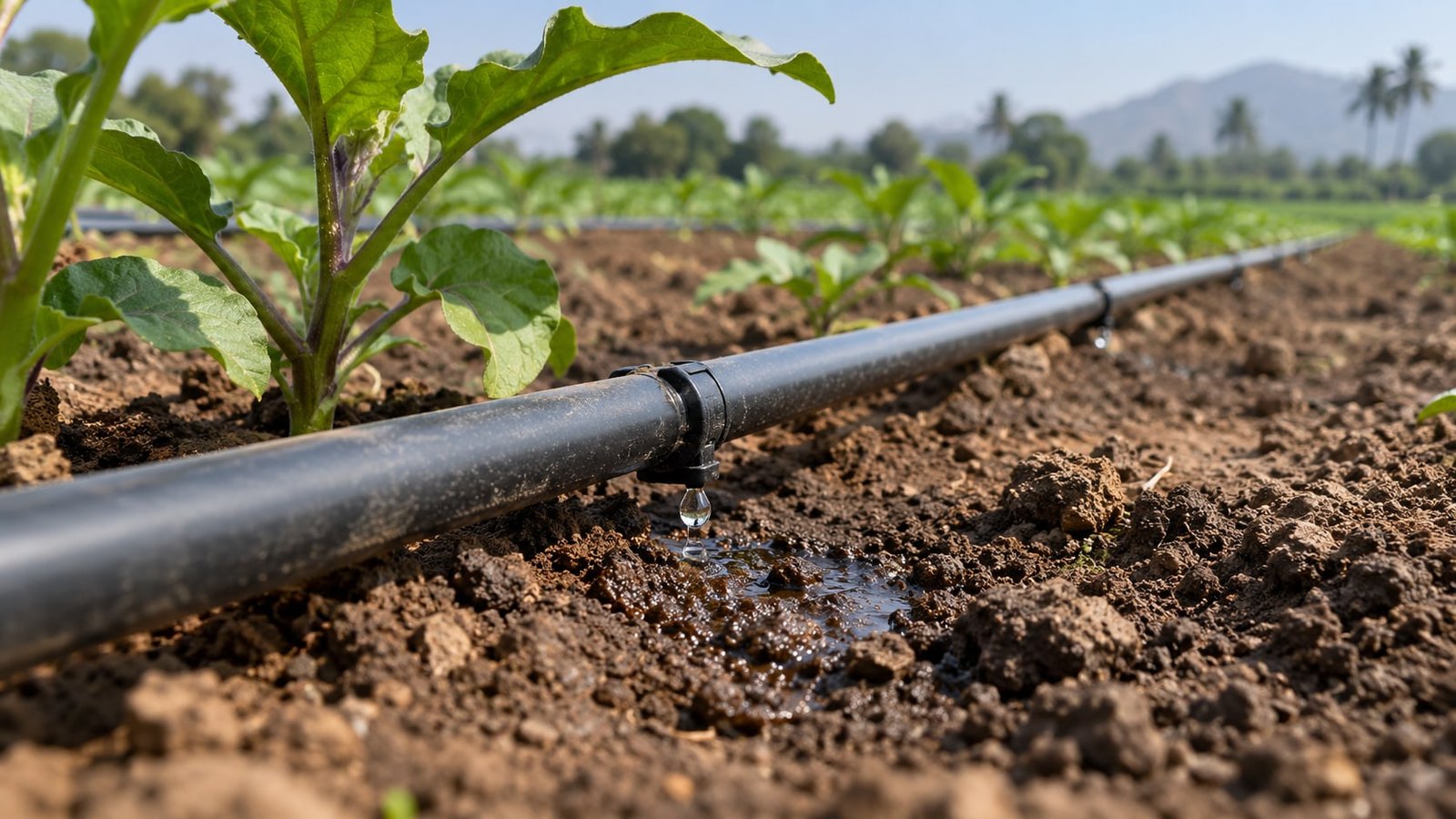
The simple test: if you can run one lateral per crop row without the pipe cost becoming absurd, drip is usually better. If your crop is sown at close spacing where that is impractical, sprinklers are the sensible system.
Many farms end up with both — sprinklers on the field crops and drip on vegetables or an orchard block. The head unit and pump can often serve both with the right design, which is worth raising with your supplier at the quotation stage.
System design, pressure requirements and subsidy terms vary by crop, terrain and state. Get a design from a qualified supplier and confirm subsidy details with your district agriculture or horticulture office.