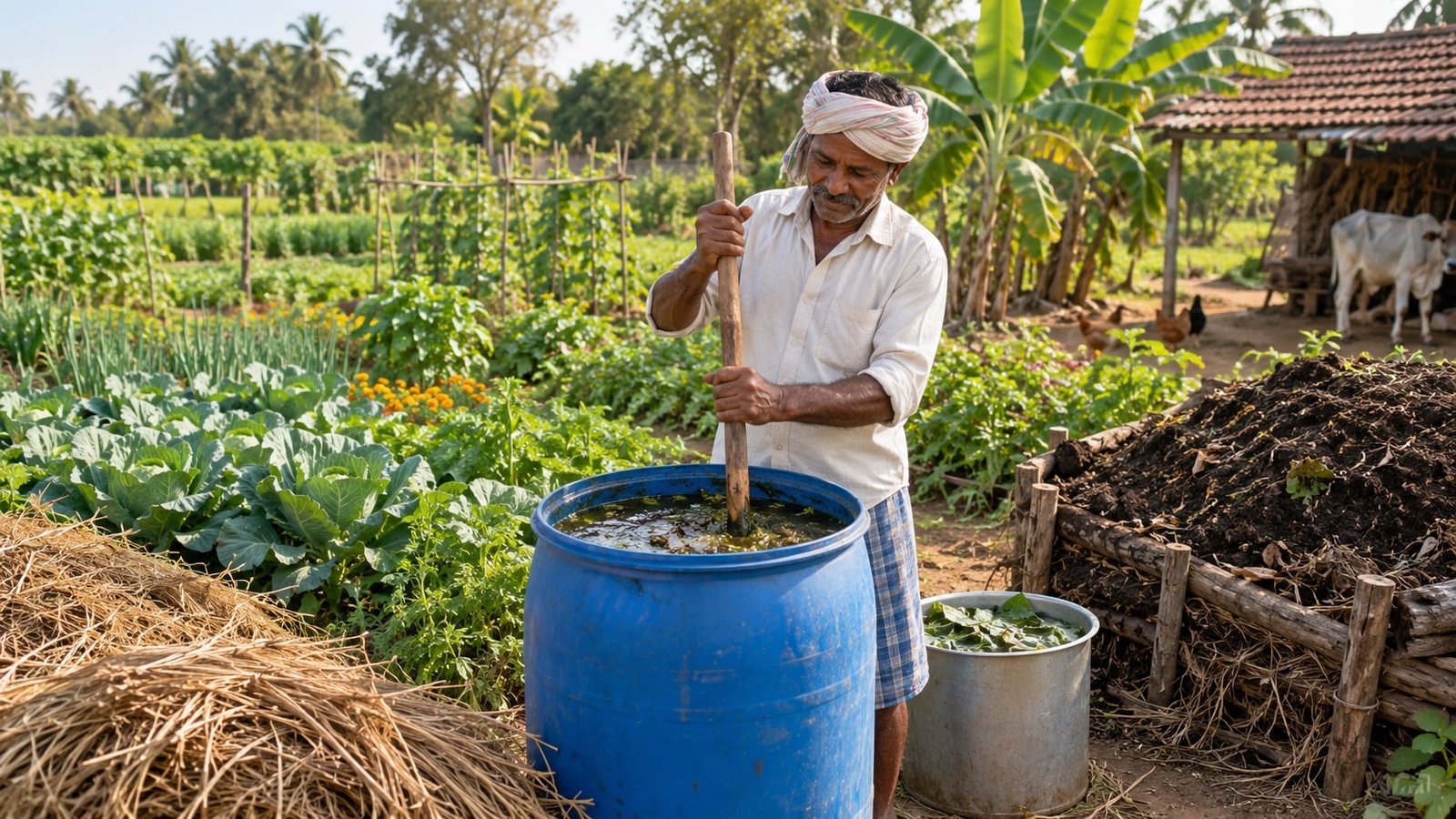
Green manuring means growing a crop specifically to plough back into the soil rather than to harvest. It adds organic matter, and where a legume is used, it adds nitrogen fixed from the atmosphere.
The objection is always the same: the land is needed for a cash crop. That objection is valid on intensive double-cropped land and much less valid than farmers think on land that sits fallow for six to ten weeks between crops.
The Main Green Manure Crops
Dhaincha (Sesbania)
The most widely used. Fast growing, tolerates waterlogging and moderate salinity, produces a large volume of biomass in a short period. Suits the gap before transplanted rice particularly well.
Sunhemp (Crotalaria juncea)
Very fast, good biomass, suppresses weeds strongly by shading them out. Prefers well-drained soil and does not tolerate waterlogging.
Cowpea
Dual purpose — can be grazed, cut for fodder, or the pods harvested before the residue is incorporated. Useful where you cannot justify a crop that produces nothing harvestable.
Cluster bean (guar)
Drought tolerant, suits arid and semi-arid conditions where the others struggle.
The Critical Point: When to Incorporate
Incorporate at or just before flowering.
Before this stage there is not enough biomass. After it, the plant diverts nitrogen into seed, the stems become woody and high in carbon, and decomposition slows dramatically. Woody material incorporated late can temporarily lock up soil nitrogen instead of releasing it — the opposite of what you wanted.
Get the timing right and the material breaks down quickly, releasing nitrogen roughly when the following crop needs it.
How to Incorporate
- Irrigate before incorporation if the soil is dry — decomposition needs moisture
- Chop or roll the crop first if the growth is heavy, so it can be ploughed in cleanly
- Plough it under and allow a decomposition period before sowing the next crop
- The gap needed depends on temperature and moisture; in warm moist conditions it is short, in cool dry conditions considerably longer
Sowing the next crop immediately into freshly incorporated green material can cause problems — decomposition consumes oxygen and nitrogen in the root zone at exactly the wrong moment.
What You Actually Get
A well-grown legume green manure contributes a meaningful quantity of nitrogen to the following crop, along with organic matter that improves soil structure and water-holding capacity.
The nitrogen contribution reduces the fertiliser requirement of the next crop, and this is the saving to weigh against the seed cost and the land occupancy. The organic matter benefit accumulates over years and does not show up in a single-season calculation.
Fitting It Into the Calendar
The practical windows on most small farms:
- Before kharif rice — dhaincha sown with pre-monsoon moisture and incorporated at puddling
- Summer fallow — where land sits empty between rabi harvest and kharif sowing
- After an early rabi harvest — where the next crop is not sown for six to eight weeks
If your land genuinely carries two full crops with no gap, green manuring is harder to justify. Consider instead a short-duration pulse that gives both a harvest and a nitrogen contribution, or intercropping a legume with your main crop.
Other Benefits Worth Counting
- Weed suppression — a dense green manure crop shades out weeds, reducing the weed burden on the following crop
- Erosion control — soil covered through the pre-monsoon period loses far less to the first heavy rains
- Soil structure — root channels improve infiltration and reduce compaction
- Nematode suppression — some species suppress nematode populations
Support
Green manure seed is distributed at subsidised rates through state agriculture departments in many states, particularly for dhaincha before the rice season. Ask at your block agriculture office before buying at market rate.
A Realistic Recommendation
Try it on one plot in the largest fallow gap you have. Compare the fertiliser you apply to the following crop on that plot against your usual plot, and compare the yields. Two seasons of that comparison will tell you whether it pays on your soil.
The most common finding is that it pays on light, low-organic-matter soils and pays less on heavy soils already high in organic matter — which is exactly where you would expect.
Species suitability, sowing time and incorporation timing depend on your region and cropping calendar. Consult your Krishi Vigyan Kendra for local recommendations.