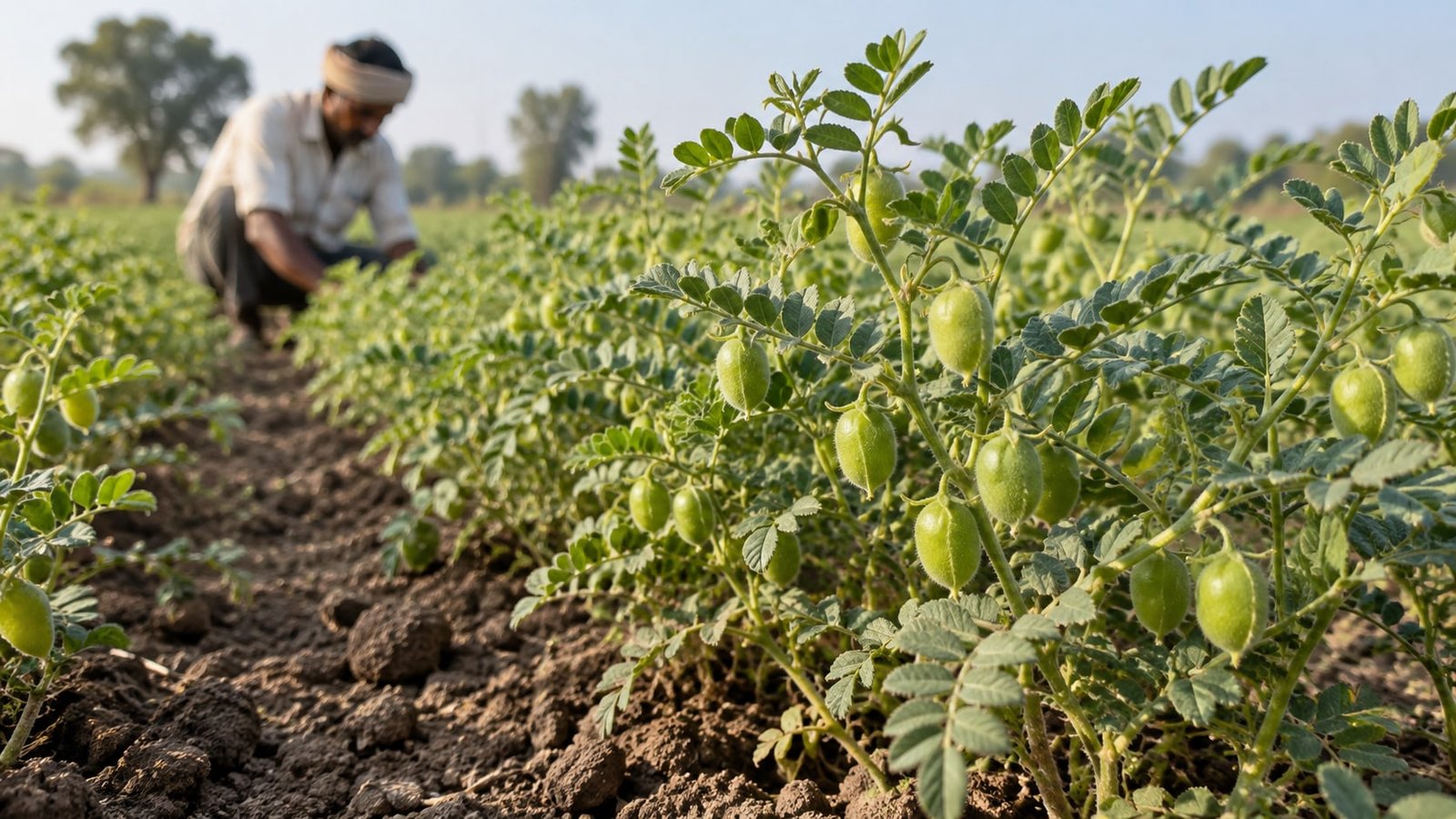
Groundnut suits light, well-drained soils and moderate rainfall, and it fixes its own nitrogen, which makes it a valuable rotation crop as well as a cash crop. It has one physiological quirk that determines yield and that many farmers do not manage for.
The Pegging Process
Groundnut flowers above ground. After fertilisation, a structure called a peg grows downward from the flower and pushes into the soil, and the pod develops underground at the tip of that peg.
Two things follow from this:
- The soil surface must be loose enough for pegs to penetrate. Crusted or compacted surface soil physically blocks pegging, and flowers that cannot peg produce nothing
- Calcium must be available in the pod zone, because the developing pod absorbs calcium directly from the surrounding soil rather than through the roots
Gypsum at Pegging
This is the practice most often missed. Applying gypsum at the pegging stage supplies calcium directly to the zone where pods are forming.
Without adequate calcium in the pod zone, you get pops — pods that form but contain no kernel or only a shrivelled one. Farmers usually attribute pops to poor variety or weather when the cause is calcium.
Gypsum also supplies sulphur, which groundnut needs for oil formation. Apply at the rate recommended for your soil and variety, at the pegging stage rather than at sowing.
Soil and Sowing
- Light, well-drained, friable soils suit groundnut. Heavy clay soils make harvesting difficult and pods break off in the ground
- Deep ploughing before sowing helps root and peg development
- Treat seed with fungicide and with rhizobium culture for nitrogen fixation — the same sequence rules apply, fungicide first and allowed to dry, then rhizobium, dried in shade
- Sow at the recommended spacing for your variety type
Bunch and spreading types have different growth habits, durations and spacing requirements. Choose according to your season and get spacing from your KVK.
Keeping the Surface Loose
Interculture between rows keeps the soil surface open for pegging and controls weeds at the same time. Stop intercultural operations once pegging begins — disturbing the soil after pegs have entered breaks them.
Earthing up lightly before pegging brings soil around the plant base and helps.
Water
Critical stages are flowering, pegging and pod development. Water stress during pegging and pod filling causes direct yield loss.
Groundnut is also sensitive to waterlogging, particularly at maturity, which causes pod rot and encourages fungal problems.
Where water is limited, prioritise irrigation at pegging and pod development over the vegetative stage.
Main Problems
- Leaf spot (tikka) — dark spots on leaves causing defoliation, and one of the most damaging diseases in the crop
- Rust — reddish-brown pustules on the leaf underside
- Stem rot and collar rot — worse in heavy, poorly drained soils
- White grub — soil-dwelling larvae that feed on roots and pods, causing plants to wilt in patches
- Leaf miner and Spodoptera — defoliating pests
Crop rotation, seed treatment and threshold-based intervention manage most of these. Continuous groundnut on the same land builds soil-borne disease rapidly.
Judging Harvest Maturity
This is difficult because the crop is underground, and both early and late harvest cost yield.
The practical method: dig up a few plants from different parts of the field and examine the pods. Mature pods have a darkened, prominently veined inner shell surface when the pod is split open, and the kernel has developed its characteristic colour.
Check several plants, not one, because maturity is uneven across a field.
Consequences of getting it wrong
- Too early — immature kernels, low oil content, poor storage
- Too late — pods detach in the soil during lifting and are left behind, and in some varieties seeds germinate in the pod
Drying and Aflatoxin
Groundnut is highly susceptible to aflatoxin contamination if pods are dried or stored damp. This is a serious food safety issue and it destroys market value, because processors and exporters test for it.
- Dry pods thoroughly after harvest, spread thin, turned regularly
- Do not dry directly on bare soil
- Do not heap damp pods
- Store dry, in ventilated conditions, off the floor
- Remove damaged and discoloured pods before storage — these are the main aflatoxin sources
Farmers who dry properly consistently get better rates, because buyers who test are willing to pay for lots that pass.
The Rotation Benefit
Groundnut leaves residual nitrogen and its haulm is valuable fodder. When comparing its economics with alternatives, count both — the fodder value and the reduced fertiliser cost on the following crop are real and are usually left out.
Varieties, spacing, gypsum rates and disease management vary by region. Consult your Krishi Vigyan Kendra for local recommendations.