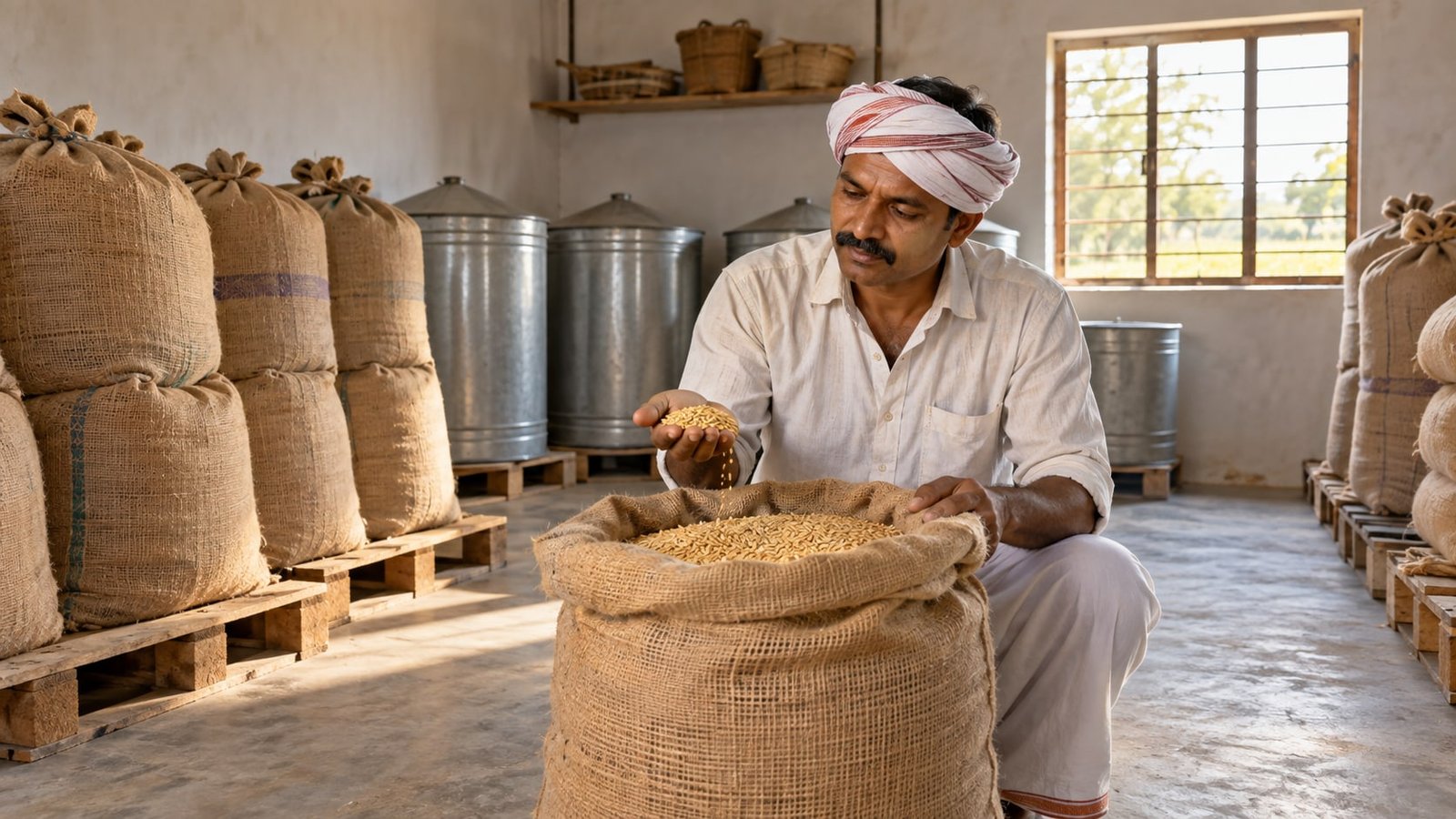
Seed is the cheapest input on the farm and the one that determines the ceiling on everything else. No amount of fertiliser, water or pest management recovers yield lost to poor seed.
The decision most small farmers face each season is whether to buy certified seed or save their own. The answer depends entirely on what kind of crop it is.
Hybrid Seed — Do Not Save It
Hybrid varieties are produced by crossing two parent lines. The first generation performs well and uniformly. The next generation segregates — plants vary widely in height, maturity and yield, and average performance drops substantially.
Saving hybrid maize, cotton, sunflower, or hybrid vegetable seed and re-sowing it is one of the more expensive mistakes in Indian farming, because the loss appears as a poor crop rather than as an obvious cost.
If the packet says hybrid, buy fresh seed every season.
Open-Pollinated and Self-Pollinated Varieties — Saving Works
Wheat, paddy, chickpea, mustard, most pulses and many traditional vegetable varieties are self-pollinated or open-pollinated. Seed saved from these performs close to the original for several generations if selected and stored properly.
How to save seed properly
- Select in the field, not from the heap. Mark healthy, true-to-type, disease-free plants during the season and harvest them separately
- Take seed from the best part of the field, not from the edges or from a patch that did poorly
- Thresh gently to avoid cracking
- Clean thoroughly — remove weed seed, broken grain, chaff and soil
- Dry properly before storage
- Replace with certified seed every three to four seasons to prevent varietal drift and accumulated seed-borne disease
Testing Germination Before You Sow
This takes ten minutes and prevents a whole season’s problem. Do it two to three weeks before sowing so you have time to buy replacement seed if needed.
- Count out 100 seeds at random from the lot you plan to sow
- Place them on a damp cloth, spread out, and roll it loosely
- Keep it damp — not soaking — in a warm place
- After the germination period for that crop, count how many sprouted
The count is your germination percentage. If it is well below the standard for that crop, either increase your seed rate proportionally or buy fresh seed. Sowing low-germination seed at the normal rate gives a thin stand that cannot be fixed later.
Seed Treatment
Treating seed before sowing protects against seed-borne and soil-borne disease and early pest attack. It costs a very small amount relative to the crop and is among the highest-return practices available.
Order matters when using multiple treatments: fungicide first, allow to dry, then insecticide if used, then biological cultures such as rhizobium last. Applying a biological culture together with a fungicide kills the culture.
Dry treated seed in shade, never in direct sun, and sow the same day where a biological culture has been used.
Storing Seed
Seed is alive. It respires, and it loses viability faster in warm, moist conditions.
- Dry thoroughly first. Moisture is the main enemy of stored seed
- Store in airtight containers where possible
- Keep containers off the floor and away from walls
- Store in the coolest available place, out of direct sunlight
- Add dry neem leaves as a traditional deterrent, or use recommended storage practices for insect protection
- Label every container with variety, year and germination percentage
Check stored seed every couple of months for insect activity and for warmth in the container, which indicates moisture.
Buying Seed — What to Check
- Buy from a licensed dealer and take a proper bill. Without a bill you have no recourse if the seed fails
- Check the tag for variety, lot number, germination percentage, purity and the validity date
- Do not buy seed whose validity period has expired
- Keep the empty bag, the tag and the bill until the crop has emerged successfully
- Avoid loose seed sold without packaging or tags, regardless of the price
If a purchased seed lot fails to germinate properly, the bill and tag are what allow you to file a complaint with the district agriculture officer or consumer forum. Farmers who buy without a bill have no case, and dealers know this.
The Simple Summary
Buy hybrid seed fresh every season. Save open-pollinated seed with proper field selection, and refresh it from certified stock every few years. Test germination before sowing, treat before sowing, and always take a bill.
Seed rates, treatment products and storage practices vary by crop and region. Consult your Krishi Vigyan Kendra for recommendations specific to your crops.